
Why are Modern Factories Still Managing Operations on Spreadsheets?
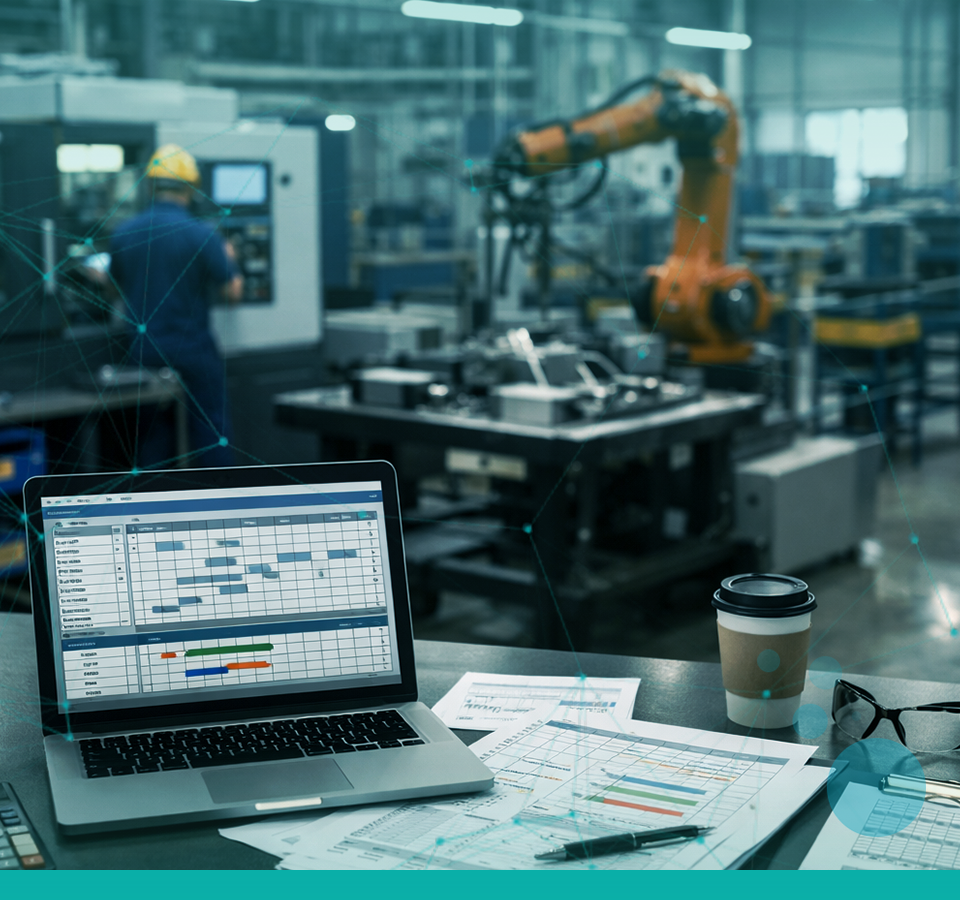
Modern Software Tools Have Proliferated in Factories
Manufacturers are investing more in technology and systems than ever before. Modern manufacturers do their planning and material management in their Material Resource Planning (MRP) system, integrating with broader Enterprise Resource Planning (ERP) systems for comprehensive resource management. Their factories employ Manufacturing Execution System (MES) software to manage real-time production processes, with the promise of bridging the gap between MRP and shop floor controls.
Spreadsheets Step in where MRP Leaves Off
With all of these investments in advanced software systems, modern manufacturers find that their buyers, planners, and operations managers all have home-grown spreadsheets that they are using to manage and forecast once jobs are released to manufacturing.
A big reason is that MRP systems do a great job of planning releases and incorporating changes – but only up until orders are released to purchasing and manufacturing. After orders are released, MRP freezes critical data in the plan, such as quantity, configuration, and need dates. If disruptions occur that would impact the plan, MRP is prompt to notify users of the exception to the plan. Over time, the number of exception messages grows, and each department creates their own spreadsheets to track exceptions, create recovery plans, track priorities, and if required to adjust the plan.
Spreadsheets Are Limited in Scope, Create Business Risk
Spreadsheets seem like a great tool, as they are highly customizable to each individual business and situation. However, some major limitations quickly are revealed, most prominent of which are:
- Hard to determine priorities
- Time consuming to produce and maintain
- Challenging to accurately model complex parts and processes
- Only as good as the expertise and experience of your staff
- Concentrates know-how in a few “experts”, creating risk in case of employee departures
- Assumptions are often undocumented and vary team-to-team
- Limited cross-organisation visibility and risk of disjoint plans
Digital Twins & AI – An Alternative to Spreadsheets
Replicating your factory in a digital twin and applying advanced AI to understand the present and model the future, manufacturers can replace the burdens and limitations of spreadsheets. Such an approach can zero in on the critical challenges that are impacting deliveries – not just now, but looking months or years into the future. Such an approach can yield powerful results:
- Improve on-time delivery
- Lower inventory costs
- Eliminate single points of failure
- Improve staff productivity – giving them the time needed to address the crucial problem areas